Gayan Sanjeewa
یک سال قبل
the Large Banyan Tree stands as a magnificent and imposing natural landmark, offering a stark contrast to the island's more arid and coral-dominated landscape. While the Baobab tree on Delft often steals the limelight due to its African origins and hollow trunk, the Banyan tree (Ficus benghalensis) is equally impressive, particularly for its expansive canopy and numerous aerial roots.
The Banyan tree is native to the Indian subcontinent and is deeply embedded in the cultural and religious fabric of Sri Lanka. In Hinduism, it is revered as a sacred tree, symbolizing longevity, immortality, and is often associated with various deities. In Buddhism, the Banyan is significant as it is believed to be the type of tree under which the 24th Buddha, Kassapa, attained enlightenment. This cultural reverence often means that Banyan trees are left undisturbed and grow to immense proportions, becoming natural landmarks.
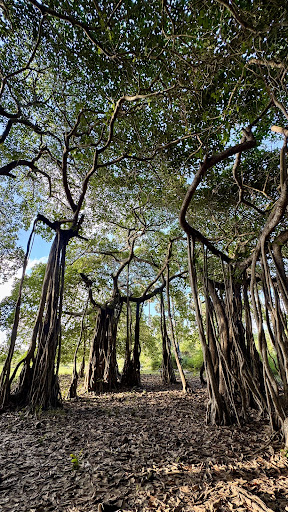
On Delft Island, the Large Banyan Tree is a prime example of this species' ability to create a sprawling, interconnected network of trunks and branches. What makes a Banyan tree so distinctive is its unique growth habit: its branches produce aerial roots that hang downwards. When these aerial roots reach the ground, they penetrate the soil, thicken, and develop into secondary trunks, effectively expanding the tree's footprint horizontally. Over centuries, this process can lead to a single Banyan tree covering a vast area, resembling a miniature forest in itself.
The Large Banyan Tree on Delft is noted for its wide canopy, which provides significant shade, a welcome respite in the island's often sun-drenched environment. Descriptions suggest it covers a substantial area, possibly several perches of land, with a height that can reach approximately 25 meters. Its extensive network of aerial roots, which have solidified into thick, woody pillars, creates a fascinating natural architecture, inviting visitors to wander beneath its vast embrace.
For the residents of Delft, this Banyan tree is more than just a large plant. It serves as a natural gathering point, a place of rest, and potentially a site of local folklore or informal community activities. Its immense size and ancient appearance contribute to the island's unique charm, adding another layer to its diverse attractions. Alongside the Baobab tree, the wild horses, and the coral structures, the Large Banyan Tree stands as a testament to Delft's extraordinary natural heritage and its connection to broader South Asian cultural and botanical landscapes. It is a striking reminder of nature's grandeur and its enduring presence in the lives of the island's inhabitants.