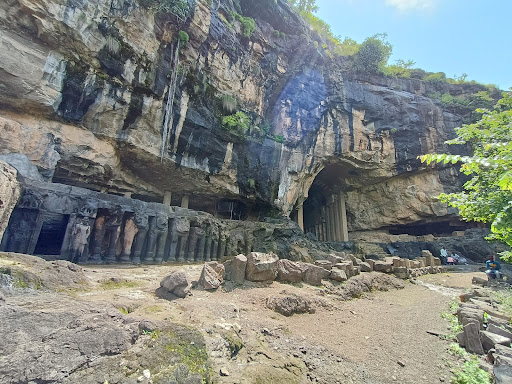
The Pitalkhora Caves, located in the Satpura range of Maharashtra, India, are a fascinating and relatively lesser-known complex of Buddhist rock-cut caves. Dating back to the 2nd century BCE to the 1st century CE, these caves offer a unique insight into early Buddhist monastic life and art.
There are a total of 14 caves at Pitalkhora, with their architecture and sculptural work reflecting the early phase of Indian rock-cut architecture. The caves are notable for their simplicity and modesty compared to the more elaborate and later Buddhist sites like Ajanta and Ellora. The most significant of the caves is Cave 1, which houses a large chaitya hall, an important Buddhist assembly hall, adorned with a stupa at its end. The stupa, a symbolic representation of the Buddha’s presence, is central to the cave’s layout and exemplifies the early Buddhist emphasis on the stupa rather than intricate figural sculptures.
The caves' interiors feature some basic but intriguing carvings, including simple Buddha figures and symbolic motifs. The carvings are less ornate than those found in later Buddhist sites but offer valuable insight into the stylistic evolution of Buddhist art. The minimalistic yet functional design of the caves provides a glimpse into the austere lives of the early Buddhist monks who resided here.
The Pitalkhora Caves are less frequented by tourists compared to more famous Buddhist sites, which means visitors can enjoy a more serene and contemplative experience. The remote location adds to their charm, with the caves nestled in a lush, forested area that enhances their sense of tranquility. However, the site’s relative obscurity means that facilities and infrastructure are minimal, and visitors should be prepared for a rugged journey.
Overall, the Pitalkhora Caves are a treasure trove of early Buddhist history and art. Their understated beauty and historical significance make them a worthwhile destination for those interested in the origins of Buddhist rock-cut architecture and the development of Buddhist monastic traditions.