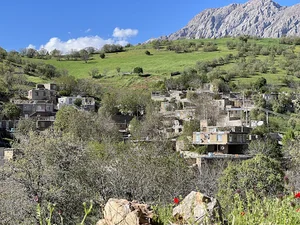
Shabankareh Historic Water Reservoir, registered on Iran’s National Heritage List as Ab Anbar-e Khan, stands in the eastern part of Shabankareh. According to local accounts, it was commissioned by Malek Mansour Khan Shabankareh’i and realized through the efforts of his wife, Hajar Meygoli, to provide drinking water for the community. Local remembrance of her role adds an important social dimension to this public structure. Ab Anbar-e Khan was nationally registered on 19 March 2007 under number 18725.
An unresolved discrepancy surrounds its construction date. The national heritage record attributes the building to the Qajar period, while local sources give the years 1337–1338 without identifying the calendar. If these are Lunar Hijri dates, they correspond to approximately 1918–1920 and the final years of the Qajar era. If they are Solar Hijri dates, construction would fall around 1958–1960 during the Pahlavi period. Until the complete registration dossier or a dated contemporary document is examined, its precise date should therefore be stated cautiously.
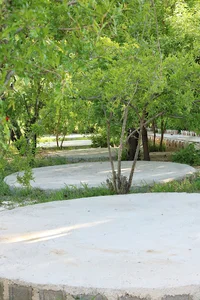
The reservoir has an elongated rectangular plan approximately 38 metres long and 5 metres wide. Its visible fabric combines stone with plaster and cement finishes, while the chamber is covered by a long pointed vault defined by a rhythmic sequence of arches. This enclosed form protected the stored water from direct sunlight, contamination and rapid evaporation in Dashtestan’s hot climate.
Openings at the front and rear channelled seasonal rainwater into the reservoir. The muddy runoff from the first rainfall was kept out; once the ground and channels had been washed clean, later rain was allowed to fill the tank. This practical system reflects a detailed local understanding of seasonal rainfall and water quality.
The exterior is simple and largely undecorated, but the interior is remarkably atmospheric. Receding pointed arches, limited light from the far opening, cool air, silence and reflections across the water create a peaceful and mysterious setting. Ab Anbar-e Khan is a valuable record of traditional water management, public benefaction and everyday life in southern Iran.
مشاهده در گوگل مپس